
Los Angeles, CA
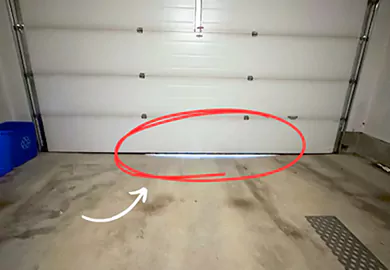
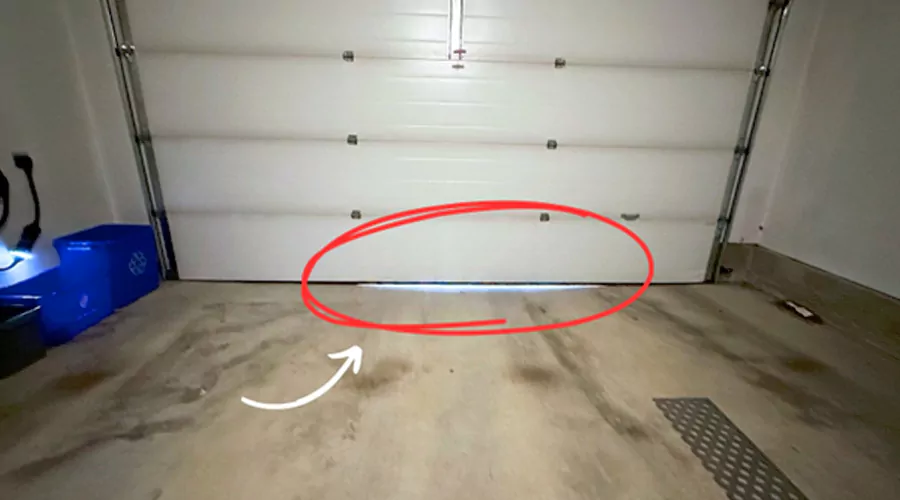
We have a driveway and a garage floor that are not perfectly level. It slopes on the left and right where the garage door meets the driveway, so the garage door touches the driveway in the middle but leaves gaps on the left and right. We’re looking for a unique solution that can address larger gaps on the sides than in the center. Basically, we want to know if a custom seal can be created to match our door and the curving floor beneath it.
Los Angeles, CA
How Common Is This Issue?
Uneven garage floors and sloped driveways are very common, especially in older homes or houses built on grading. More than 40% of residential garages eventually develop some degree of floor settling or slope that interferes with how the garage door meets the ground.
This results in:
- Gaps of varying size across the bottom of the door
- Air drafts
- Water seepage during rain
- Dust, pests, and debris entering the garage
- Difficulty maintaining temperature or humidity
So yes — this is a frequent and fixable problem.
Why This Issue Occurs
Uneven contact between the garage door and driveway typically results from one or more of the following:
1. Concrete Settlement
Over time, soil shifts under the driveway or garage slab. One side settles more than the other, causing sloping or unevenness.
2. Driveway Erosion or Wear
Rainwater runoff, repeated car movement, and age can slowly erode sections of the driveway, creating dips.
3. Improper Original Construction
When the driveway or garage pad is poured at a slight angle—or if it settles differently—the door bottom seal won’t line up perfectly.
4. Garage Door Not Designed for Irregular Surfaces
Most garage doors are manufactured assuming a flat threshold. When a floor curves, bows, or dips, standard seals leave gaps.
How the Issue Can Be Addressed
Below are the most effective and industry-standard solution options.
Option 1 — Custom Garage Door Bottom Seal (Best for Your Situation)
A technician measures the exact slope and creates a custom-profile bottom seal that varies in height across the width of the door.
This seal compresses to match the curved or uneven surface.
How It Works
- A flexible rubber or vinyl seal is installed into the door’s bottom retainer.
- The technician custom-cuts or layers material to match the slope.
- Higher-gap areas get extended sealing; low areas get standard height.
Best For
- Gaps that vary from side to side
- Homeowners wanting a non-invasive fix
- Situations where resurfacing concrete is unnecessary or too expensive
Example Techniques
- Tapered rubber seals (thicker on one end)
- Layered seal inserts
- Shaped EPDM rubber with gradual height transition
Pros
- Affordable
- No construction work needed
- Works immediately
- Custom fit
Cons
- Must be installed by an expert for perfect compression
- Needs replacement every 3–6 years depending on climate
Option 2 — Garage Threshold Ramp Seal (Adhesive Rubber Threshold)
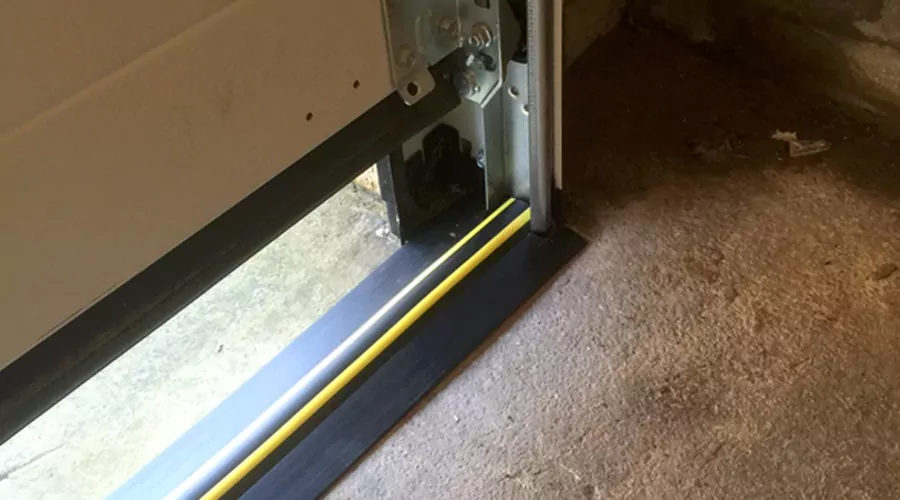
A heavy-duty rubber threshold is glued to the driveway floor.
The garage door closes onto this threshold, filling uneven gaps.
How It Works
- A raised rubber strip (1–1.25 inches tall) is bonded to the floor.
- The strip’s height compensates for uneven driveway dips.
- Seals against water, dust, pests, and air.
Best For
- Large gaps on one side
- Driveways sloping outward
- Homes prone to heavy rainwater intrusion
Pros
- Very effective for blocking water
- Long-lasting (often 8–15 years)
- Works even with significant unevenness
Cons
- Creates a small raised lip; you drive over it
- Floor must be clean, dry, and properly prepared
Option 3 — Concrete Grinding or Resurfacing (Permanent Structural Fix)
For homeowners wanting a permanent solution, the driveway slab can be reshaped.
How It Works
- A concrete specialist grinds or resurfaces the floor so the garage door meets a level edge.
- This eliminates the slope at the contact line.
Best For
- Severe gaps
- Aging or crumbling concrete
- Driveways being renovated anyway
Pros
- Permanent
- Improves drainage
- Enhances home resale value
Cons
- More expensive
- Requires more labor and drying time
- Not always necessary for functional sealing
Frequently Asked Questions
Not typically — the door itself won’t get damaged. However, the seal may wear faster because it’s making uneven contact. Custom seals solve this problem.
Technically possible, but not recommended:
- For uneven floors, proper sealing requires
- Correct measurement of slope differences
- Choosing the right seal profile
- Installing at exact alignment angles
- Professional installation ensures full compression and weather resistance.
No. Threshold seals are designed to be driven over daily. They are tapered and typically only ½–1¼ inches tall.
If you’re dealing with:
- Water entering the garage
- Rodents coming in
- Temperature loss
- Visible daylight under the door
…then yes, you should address it as soon as possible.
Most onsite inspections take 20–30 minutes, after which the technician provides options and pricing.